← 대시보드로
2026-11-05
9개 영상
2026-11-05 06:03 생성
This Claude Trick Rebuilds ANY App You Pay For
Nicholas Puru 2026-11-05
This Claude Trick Rebuilds ANY App You Pay For
↗ 유튜브에서 보기

핵심 요약

기업들이 많은 비용을 지불하면서도 정작 1~2개 기능만 쓰는 구독형 소프트웨어를 Claude와 오픈소스 도구를 활용해 직접 대체 개발하는 방법이다. 깃허브의 'Reverse Engineer Anything' 도구를 이용하면 소스코드를 몰라도 소프트웨어의 동작 원리를 AI가 학습해 필요한 기능만 정확히 재구현해 준다. 비싼 구독료 갱신 전에 단일 기능으로만 쓰는 사내 툴을 점검하고 직접 구축해 비용을 절감할 수 있다.

주요 포인트

  • **구독료 낭비 문제**: 수많은 기능 중 극히 일부만 사용하면서도 매월 고가의 유료 소프트웨어 구독료를 지불하는 비효율이 발생함.
  • **Reverse Engineer Anything 활용**: 원본 소스코드 없이도 소프트웨어의 외부 동작 및 메커니즘을 분석해 주는 깃허브 오픈소스 도구 연계.
  • **핵심 기능 맞춤형 재구현**: 화면 녹화 및 링크 공유처럼 실제 사용하는 핵심 기능 하나만 수행하는 자체 버전을 AI로 직접 개발 가능.
  • **동작 방식 학습 원리**: 단순한 코드 복제나 로고 카피가 아닌, 기능이 실제로 동작하는 패턴과 로직을 학습해 새롭게 구축함.
  • **실천 방안**: 다음 결제 갱신 전 영수증을 확인하고, 단일 기능 용도로만 쓰이는 도구부터 자체 제작으로 대체 권장.
I shouldn't be giving this away for free. But here's how to rebuild any application or software that your team is already using just by using Claude. Right now, you are paying for a dozen software subscriptions every month where you pay for 100 features, you only use two. But now, there is a free way out. There's a tool on GitHub called Reverse Engineer Anything. And it went viral this month. You just plug it into your AI, pointed at a software, and it figures out how a feature works without ever seeing the application's code. So, here's what that looks like in your business. Let's say your team is paying for a screen recorder, but all anyone does is just record a quick video and shares a link. But now you can just ask Plot to study how that recorder does it. It looks at the software. It explains how the recording in the share link works and then it builds you your own version that does just that one job. Now, here's why this works. The AI doesn't just copy the company's code or its logo. It learns how the feature behaves and it rebuilds that behavior just for you. So before your next subscription renewal, just open your software bill and circle every single tool that your team only uses for one thing. Those are the ones that you can start rebuilding. Just comment need and I'll send you the entire setup guide so you can start rebuilding your first tools this
ChatGPT & Claude Keep Repeating Mistakes You Already Fixed
Dylan Davis 2026-11-05
ChatGPT & Claude Keep Repeating Mistakes You Already Fixed
↗ 유튜브에서 보기

핵심 요약

ChatGPT나 Claude가 수정한 실수를 새 대화에서 반복하는 이유는 AI의 자체 메모리 기능이 무엇을 남기고 버릴지 제멋대로 판단하기 때문입니다. AI의 불완전한 메모리에 의존하지 않고, 사용자가 직접 제어할 수 있는 3가지 위치(스킬, 지침, 메모 파일)에 수정 사항을 저장해야 지속해서 반영됩니다.

주요 포인트

  • **AI 자체 메모리의 한계**: 사용자가 원치 않는 스타일을 기억하거나, 중요한 요청을 사소하다고 판단해 삭제하며, 팀원 수 변동 같은 업데이트를 제때 갱신하지 못하는 문제가 발생합니다.
  • **스킬(Skills, How)**: 특정 작업이나 업무를 수행하는 방식에 관한 내용입니다. 결과물 초안만 고치고 끝내지 말고, 그 수정한 규칙을 반드시 해당 스킬 정의에 직접 업데이트해야 합니다.
  • **프로젝트 및 폴더 지침(Project Instructions, Who)**: 특정 클라이언트나 개별 프로젝트에 종속된 고유 맥락과 정보를 담아두는 위치입니다.
  • **노트 파일(Note Files, Maybe)**: 아직 스킬인지 프로젝트 지침인지 분류하기 애매한 내용을 모아두었다가, 나중에 정리하여 적절한 위치로 옮기는 용도입니다.
So let's say that you fix something in chat GPT or Claude and it says, "Got it. I'll remember that." Then a week later in a new chat, that same mistake happens. I see this every week with the people that I coach and they almost always think that they did something wrong. They didn't. These tools decide what they remember and a lot of the time that fix you cared most about doesn't make the cut. The good news is is there are three places a fix needs to go so AI remembers it for good. I'll walk you through each one of those locations in this video. So, let's get into it. Often times people assume the more that they work with a given AI, the more it learns about them and gets more custom to their preferences. Even the providers say this is true, but it's only partly true and most of what the AI remembers is accidental and in its control not yours. So when you talk to a given model today, when you talk to that same model tomorrow, often times it's just the same model and very rarely did it learn anything that means anything to you yesterday. And the reason that happens is there are three places an AI can learn something. It's memory, instructions, and files. It's memory is what most people lean on unintentionally or accidentally because the AI proactively remembers things about you in different locations inside of its memory. But with the memory, it maintains it. So it's not up to you what it keeps and what it drops and often times it drops or keeps the wrong things all the time. And I've seen this manifest in three different ways. So the first one is the AI keeps something that you didn't want it to keep in the first place. So let's say that you asked the AI to write a formal letter to the bank. It'll remember that you prefer formal writing. So when you write a quick note to your team, it writes it formally, unnecessarily. That's something it kept that it shouldn't. The next one is that it drops something that you did want it to keep. So in this case, you could be writing a weekly email maybe to your client. In the email you send to your client, you want the numbers to be at the top. So you specify for it to remember that. But the next week you run it, it doesn't. It puts the numbers at the bottom again. That's because it deemed that not important enough for it to remember. Because there's only so much that the AI can remember about you, at least right now. And then the third one is where the AI keeps something that's actually out of date. So, maybe in the past you told the AI that you have five people on your team, but a few months later you actually have eight. And between those two moments, the AI forgot to remember the fact that you updated the size of the team to eight. So, these are the three types of scenarios that I see most often with the weaknesses in memory in relying solely on that for the AI to remember the things that you care about. And that's exactly why I don't recommend my clients to rely on memory at all. Instead, I recommend they put things that matter most to them in three locations, so that specific memory persists across time. And most importantly, it's in your control. So, what are those three locations? So, we have skills, project instructions or folder instructions, and note files. Quick pause. If you're enjoying this video, you're going to enjoy two other things. First off, if you'd like to work with me, below are a series of offerings to see if there's a good fit between the two of us. And the second thing is I have a 30-day AI insight series. It's completely free. You'll get 30 insights in your inbox of how you can apply AI to your business and your work. With that being said, let's go back into the video. I'll walk you through each one of these in detail. But really quick, the way I think about it, anything that's related to the how, so how I do a given task, is likely going to go into a skill. The next one is the who, so this is related to a very specific project topic and or client. That's going to go into the client instructions or the instructions in a folder. And then the maybe column is for your notes. So, if you're uncertain as to where to put this, you then put this in your notes file, and then you put it somewhere else later after that's after that's kind of built up over time. So, let's start with the how. So, these are in relation to a task or a job, how you do something specifically. A lot of people I work with, they create skills. So, they'll create a skill and then they'll then run that skill to do something. So, in this case it could be drafting a report, a presentation, it doesn't matter. When the report or presentation comes back to them, they find that the presentation has a series of mistakes. So, what they do is they have the AI make the fixes to that draft saying, "Here's a bunch of mistakes you've made, fix this draft. They're happy with the output, that's great. But they forget a really important step after they fixed the draft. They forgot to update the skil
4 clients asked me the same AI question in one month
Dylan Davis 2026-11-05
4 clients asked me the same AI question in one month
↗ 유튜브에서 보기

핵심 요약

주니어 직원들이 읽어보지도 않은 AI 작업물을 제출하는 상황 속에서, "AI가 대신 일하면 좋은 작업물의 기준을 어떻게 배울 것인가"라는 질문이 다양한 업계 리더들 사이에서 공통으로 제기되고 있다. 법률, 건설, 투자 등 서로 다른 분야의 고객들이 한 달 사이에 동일한 고민을 털어놓았다. 이는 주니어뿐만 아니라 연차와 직무를 막론하고 AI를 사용하는 모든 사람에게 닥친 중대한 문제다.

주요 포인트

  • 주니어 실무자들이 본인이 검토조차 하지 않은 AI 생성물을 상사에게 그대로 전달하는 현상이 발생함
  • AI가 업무를 도맡아 처리하면서 실무자가 '좋은 결과물(Good)'의 기준과 감각을 학습할 기회를 잃고 있다는 우려가 커짐
  • 법률, 건설, 투자사 등 서로 무관한 다양한 산업군의 고객들이 단기간에 동일한 문제를 제기함
  • 이 문제는 특정 연차나 신입에 국한되지 않고, AI를 업무에 활용하는 모든 경력자에게 적용되는 구조적 문제임
A few weeks ago, a client of mine, a senior executive, asked me a question that I haven't been able to stop thinking about. People earlier in their careers at his firm are handing him AI work that they've never even read. And he asked me, "If AI is doing the work, how does anyone ever learn what good looks like?" But that same month, a law client asked me the same thing. Then a construction client, then an investment firm, people who have never met, all asking the same question in the same few weeks. So, I wanted to dig a bit deeper and do some research. And it got stranger the deeper that I went because this turns out to be way bigger than one group of workers. It touches basically everyone using AI, no matter how long you've been doing your job, experienced or
Would you let AI text for you for a week?
Nate Herk 2026-11-05
Would you let AI text for you for a week?
↗ 유튜브에서 보기

핵심 요약

일주일간 AI에게 문자 답장을 맡길 수 있는지 묻는 인터뷰에서 사람들은 상반된 반응을 보였다. 연락 빈도가 적거나 안 읽은 문자가 많은 사람들은 긍정적이었으나, 대다수는 사적 연락에 AI를 쓰는 것에 강한 거부감을 드러냈다. 문자는 개인적인 관계를 유지하는 수단이며 AI의 오작동 위험이 있다는 점이 주된 반대 이유였다.

주요 포인트

  • 연락량이 매우 적거나 밀린 문자가 많은 사람들은 AI 대리 답장에 긍정적인 반응을 보임
  • 업무용 메일 작성 등에는 AI를 쓰더라도 가족이나 친구와의 사적인 문자에는 맡길 수 없다는 의견이 지배적임
  • AI가 잘못된 정보를 전달하거나 거짓말을 할 가능성이 있어 신뢰하기 어렵다고 지적함
  • 문자는 단순 정보 전달이 아닌 사람 간의 개인적인 유대와 소통 수단이라는 점을 핵심 반대 근거로 꼽음
Would you let AI answer your texts for a week? Absolutely. Sure. I only get about two and they're from my mom. From my mom. So, great answer. I love it. No. Absolutely not. Yeah. I mean, wait. Personal text or business text? Personal texts? Nah. Why not? No way. No. Never. Me neither. Why? We just Claude told me to ask the question. Oh, I I kind of already do that quite frankly. Like I wouldn't let it, you know, text my mom happy birthday or anything. No, because they get it wrong sometimes. Give me a lie. Like your text messages with friends and family. Um, not really. No, I wouldn't either. What does you mean either? I probably would. I don't I don't text that much. Uh, I have a lot of unread texts. Uh, yes or no question with with guardrails? Yeah. I wouldn't because I view texts as being very personal and and keeping in contact with people. So, no. Yes. Although I have sent a couple nice emails to my wife using Clyde.
Every AI Business Ranked from Worst to Best
Nate Herk 2026-11-05
Every AI Business Ranked from Worst to Best
↗ 유튜브에서 보기

핵심 요약

AI로 시작할 수 있는 비즈니스들을 기술 난이도, 시장성, 지속성을 기준으로 최악부터 최고까지 평가한 영상이다. 만들기는 쉽지만 마케팅과 고객 유지가 극도로 어려운 AI SaaS가 최하위권(13위)을 차지했다. 반면 초보자 진입용으로는 기존 단가를 파괴할 수 있는 AI 웹사이트 외주 제작이 추천된다.

주요 포인트

  • **평가 기준 세 가지**: 비즈니스 성공을 위해 기술 난이도(Technical), 수요 대비 공급(Market), 장기 생존력(Durability)을 각 5점 만점으로 채점함.
  • **13위 AI SaaS**: 앱 개발 자체는 며칠이면 끝나지만, 포화된 앱 시장과 극심한 고객 이탈(Churn) 방지가 어려워 초보자가 시작하기에 가장 최악인 모델임.
  • **12위 얼굴 없는 AI 채널**: 단순 양산형 콘텐츠는 수익화가 제한되므로, 스폰서 유치나 유료 커뮤니티로 연결할 수 있는 명확한 타깃 오디언스 확보가 핵심이나 플랫폼 정책 리스크가 큼.
  • **11위 AI 웹사이트 제작**: AI 도구를 활용해 단 몇 시간 만에 사이트를 제작할 수 있어, 기존 수천 달러짜리 코딩 외주 시장을 가격 경쟁력으로 공략하기 좋은 초보자 추천 모델임.
So, there are a ton of businesses that you can start with AI and every day more and more are being created. That's why choosing the right business to start is harder than ever. Now, I've run some of these businesses, I know friends who run them, and I see a lot of my community members start multiple businesses on this list. So, I've seen and know these businesses [music] inside out. So, in this video, I'm going to rank each AI business that you can start from worst to best. I'm going to rank them based on how technical you need to be, the market space, and long-term durability. So, by the end of this video, you'll know which AI business you should try to build and which ones to ignore. So, a quick preface, every business on this list can work. It's really just a matter of what types of problems that you want to have. It's obviously based on my experience and what I've seen, so it's a little bit subjective. But, each one is going to get three scores out of five. Technical is how much skill that you need to deliver something that people will pay for, and a lower score on this ranking means more skill required. Market is whether there are more buyers than sellers right now, and durability is whether it can turn into a real business that lasts and keeps growing. Also, any prices that I mention are what businesses charge, not a promise of what you're going to make. But, with all that out of the way, let's start at the bottom of the list and work our way up. All right, so number 13 on the list might be a hot take, but AI SaaS, where you build software with something like Cloud Code, and you charge people a monthly subscription to use it. Now, this is the most hyped up one on the list, and to be fair, it also is one of the most scalable, but it's the hardest to start. Most people who successfully scale SaaS already had an audience or a service business or money going in in some way, because building the app might take an afternoon or a few days, but getting people to find it, pay for it, and to not churn out or to not cancel their subscription is the actual business, and it's not easy. So, technical here is a four, because security and infrastructure are going to get real once you have people actually using it, hundreds of people, thousands of people. Market is a one, roughly 560,000 new apps hit the App Store in the first half of this year, which is almost as many as all of 2025, and downloads barely actually moved. And then, durability here is a three, because a moat can last, but one platform update could kill a thin wrapper. The ceiling is pretty huge, scalable with a small team, but it's the worst place to start in my opinion. And moving on to number 12, we have faceless AI channels. That could be YouTube, TikTok, or Instagram accounts where AI is making the content and you never show your face. Now, these can work, but views alone are not going to pay you. So, you have to be very thoughtful about what you're building. YouTube won't monetize mass-produced repetitive AI slop. So, you need an audience that somebody actually wants to pay to reach in the form of sponsorships. So, take a news page like PewDiePie, for example. They could theoretically automate that entire account with AI. And now they have reach, so sponsors will pay to get in front of it to get a post. A sports picks account, they could also sell people into like a paid Discord where people in there are also giving out more sports picks. So, brain rot content could go viral, but nobody's really paying to reach that audience. Now, I'm actually myself, kind of for fun, building a few faceless channels for AI Automation Society right now, and I'm thinking about the audience. And picking that comes before everything else. But this one really doesn't take much to get started as far as like capital or money, besides maybe just like a Cloud Code subscription. So, it can be fun to experiment with and maybe over time it grows into a real is going to be a two. Durability is going to be a one because the platform can change the rules on you overnight. But there is so much value in actually being able to have a channel or an account where you have a lot of people who actually care about that content. And if sponsors care to get in front of it, very, very valuable. All right, coming in number 11, AI websites. You basically just build sites for businesses with AI like Cloud Code or Codex or Lovable. So, it really just takes an afternoon instead of weeks. Now, this is one that I'd tell a total beginner to start with. I think it's a great place to start. It's easy, it's super visual. You can build a demo site in like 20 minutes before you even pitch to a business. A lot of dev agencies are still charging 5K to 10K for something that you can build in an afternoon because of AI, because those dev agencies might be doing it the old way where they're writing custom code. So, right now you can undercut them. But there is a ceiling to this business model. I think it's 
Describe AI agents in 2027 in one word
Nate Herk 2026-11-05
Describe AI agents in 2027 in one word
↗ 유튜브에서 보기

핵심 요약

2027년의 AI 에이전트를 한 단어로 표현해 달라는 질문에 참가자들은 놀라움과 두려움이 교차하는 다양한 시각을 내놓았다. '필연적', '변혁', '게임 체인저' 같은 폭발적인 기대감과 함께 '압도적', '두려움', '장악' 등 통제와 위협에 대한 경계심이 공존했다. 전반적으로 AI 에이전트의 거대한 영향력을 인정하면서도 긍정과 부정 양극단의 감정이 뚜렷하게 드러났다.

주요 포인트

  • **피할 수 없는 거대한 흐름**: '필연적(Inevitable)', '변혁(Transformation)', '혁명적(Revolutionary)' 등의 단어가 자주 언급되며 AI 발전이 거스를 수 없는 대세임을 강조함
  • **기대와 두려움의 양극단**: 놀랍고 유능하다는 긍정적 평가와 함께 '두려움(Scary)', '우려(Concerning)', '압도적(Overwhelming)' 등 기술에 대한 불안감이 공존함
  • **현실적 효용과 확산**: '비용 효율적(Cost effective)', '규모(Scale)', '유능함(Capable)'처럼 실제 산업과 일상 전반에 대규모로 파급될 것이라는 전망이 나옴
  • **지속적인 최적화 필요**: 급격한 발전 속에서도 지속적인 반복(Iteration)과 추가 최적화(Need to be optimized)가 여전히 중요한 과제로 지적됨
What about one word to describe AI agents in 2027? There you go. Inevitable. I wish I am. I am inevitable. Inevitable. Slow down. Transformation. Transformation. You stole my word. Iteration. Takeover. Wow. Capable. Overwhelming. Overwhelming. Answer. Numerous. Concerning. Amazing. Scary. Scary. We've gotten a lot. We've gotten some, you know, both ends of the spectrum here. I mean, it's amazing stuff, but scary. AGI, revolutionary, scary, scale, cost effective, like game changers. Transformative. We've gotten a few transformatives today. That's one that's on the bingo card of AI words. Need to be optimized. You know, that's more than one word, but it works
Be CAREFUL when using ChatGpt now!
Nicholas Puru 2026-11-05
Be CAREFUL when using ChatGpt now!
↗ 유튜브에서 보기

핵심 요약

최근 출시된 신규 모델들은 겉보기엔 그럴듯한 답변을 내놓지만 작업의 원래 목적을 놓쳐 사용자가 계속 개입하고 수정해야 하는 피로감이 커졌다. 모델이 자체 검증을 거치며 할당량만 소모한 채 정작 요청한 작업을 끝내지 못해, 작업을 완전히 넘겨두고 다른 일에 집중하기 어려워진 점이 가장 큰 문제로 지적된다.

주요 포인트

  • **지속적인 감독 요구**: 한 번 지시하고 끝내야 할 작업에 대해 목표를 계속 재확인하고 같은 오해를 바로잡아야 해 업무 효율이 크게 떨어짐.
  • **성과 없는 분주함**: GPT-6 계열 모델들이 광범위한 자체 검사로 사용량만 낭비하고 본래 작업은 미완성으로 남겨두는 현상이 자주 보고됨.
  • **예측 불가능한 할당량**: 코딩 성능 자체는 우수하더라도 모델의 사용량 및 크레딧 제한이 들쑥날쑥해 전문적인 작업 일정을 세우기 어려움.
  • **명확한 프롬프트의 한계**: 완료 기준과 제약 조건을 명확히 설정해도, 현재 모델들의 실제 작업 완료도는 대외적 홍보 수준에 미치지 못함.
I am done with ChatGPT and you probably want to be as well. Over the past month or so or whenever all of these new models have been released, I keep losing the benefit that I came to OpenAI for and that's being able to hand off a task and simply move on. I explain what I want, I get a result that often misses the intention completely and I have to keep intervening. [music] When that repeats itself, I can't give my attentions to something else. Obviously very problematic. Now a model can produce a polished answer and then follow individual instructions and still lose sight of what the work was supposed to accomplish. that is end up checking the direction of the work as well as the result. Now some of this Now some of the review is part of just using AI fundamentally. Like I expect to be checking facts and making the decisions. But if I have to keep restating the goal, evaluating the next attempt and just correcting the same misunderstanding [music] over and over again, the amount of supervision changes whether the tool is going to be at all useful for me. And personally, that's been my frustration with these newer OpenAI models including Astra, Sol, especially inside of Codex. I'm talking about the work that I'm handing them. [music] Especially the longer tasks. So your experience with ordinary ChatGPT, it probably and can be very very different than my experience. But what I can judge is the results. Did it preserve what I asked for? Did it finish the work and the job at hand? And how much tension [music] did I spend getting it there? Now an impressive first answer, this doesn't natively settle those questions if the next several turns just kept on missing the point, right? But there's also responsibility on our side as well. For you as well. Give the model a very clear outcome. Give it the context [music] that it actually needs. And of course an example when the result is hard to describe and you should probably be giving it the constraints that [music] it has to be respecting. So more or less you need to be explicit about what finished means and check your saved instructions. Now some old blanketed rules, this can trigger unnecessary checks [music] like an old agents.md file which is the equivalent of if you know a little bit more about that. But more reasoning isn't automatically better. You match the approach to the task and then [music] you look at what it actually produced. And I agree with all of that, and that's kind of like the general consensus on how you should be using AI, but even taking it into account, the results that I'm getting just do not live up to how these models are effectively being sold to everybody. Now, the general public reports that really interested me, they [music] describe that same exact gap between doing things and just completing the actual task that is required. Now, inside of this Reddit thread here that I started from, the author says that GPT-6 models run extensive [music] checks, consume allowance, and come back with the original task still unfinished. Now, that's their report, of course, not a run that I have specifically and [music] independently reproduced, but it's a specific complaint. The model can stay busy without making useful progress. And beyond that, like all of these checks themselves, like they're not the problem. Having this feature of a check that is going to be finding real error, like this can save more time than it takes, [music] but I want the model to connect that checking to the requested outcome, and then resolve the important [music] questions that we have or the important problems, and reach a useful stopping point. And this activity alone, it does not show that it has done these things. So, if I'm going to be completely honest, especially from my experience. So, there's another user, and of course, I'll try my best to argue both sides and play devil's advocate, but there's another user who reported that Soul's coding was excellent, while their allowance became too unpredictable to rely on professionally. Now, their complaint, it wasn't that the model couldn't code, it was just that they could not plan their work around the access that they were getting. And to that effect, I looked for complaints, so I can't use that search to tell you how most users are feeling. There are people in those same discussions reporting good results, including a successful overnight Soul task with, you know, lower usage than before. But those points and those posts, they're identifying things to watch for. So, that's the model, that's the application, that's your instructions, and the conversation history can all contribute to that. And I don't know what caused every failure. What I do know is when the experience is simply costing me too much [music] attention. And these resets that we've been constantly getting, like I initially wondered whether OpenAI just kept giving people more usage in all these different resets because they knew they weren't happy, or people
Claude Spends 80% of Its Time Waiting on You. One Prompt Fixes It
Dylan Davis 2026-11-05
Claude Spends 80% of Its Time Waiting on You. One Prompt Fixes It
↗ 유튜브에서 보기

핵심 요약

Anthropic의 조사 결과 클로드 같은 AI 에이전트는 전체 작업 시간의 80%를 사람의 응답을 기다리는 데 소비하며, 인간이 주요 병목으로 작용하고 있습니다.

이를 해결하려면 AI가 작업을 중단 없이 끝내는 데 필요한 모든 질문을 시작 전에 한 번에 묻도록 유도하고 답변을 제공해야 합니다.

비용이 발생하거나 되돌릴 수 없는 상황에서만 사람을 찾도록 지시하면, 사용자가 다른 업무를 보는 동안 AI가 30분에서 1시간 이상 연속으로 자율 작업할 수 있습니다.

주요 포인트

  • Anthropic 엔지니어들에 따르면 에이전트가 아닌 인간의 늦은 피드백이 AI 작업의 주된 병목임
  • 작업 시작 전 필요한 모든 질문을 한 번에 몰아서 하도록 요청하는 프롬프트 적용
  • 유료 결제 발생이나 복구 불가능한 작업 외에는 중단 없이 끝까지 혼자 일하도록 자율성 부여
  • 사용자가 회의 등으로 부재중인 30~60분 동안 AI가 단독 작업을 완수해 업무 생산성 극대화
So, this is the habit I recommend all my clients start with because it's the easiest to fix and also has one of the biggest impacts on your kind of engagement with AI. So, through those reports, there was an interesting finding that Anthropic discovered. They found that the AI, Claude in this case, was waiting 80% of the time. And there was a quote from one of the Anthropic engineers at the bottom of this that stated that the humans are actually starting to bottleneck the agents, not the other way around. So, the fix here is simple. All we need to do is give our input, our approval, answer any questions the AI has before it actually begins. All we're saying to the AI is before you start, I want you to ask me questions you need answered to finish without stopping. Ask them all at once up front, and once I answer them, I want you to work until you're done. Only stop and come back to me when something would cost me money or can't be undone. And if you kick an AI off in this way and start it with this type of prompt, it can go off and work for 30 minutes, 45 minutes, an hour while you're in a meeting. So, you're kind of being doubly productive, which is nice.
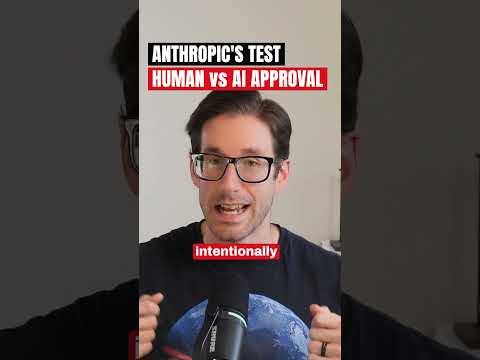
Humans spotted 14% of unsafe AI actions. AI spotted 89%
Dylan Davis 2026-11-05
Humans spotted 14% of unsafe AI actions. AI spotted 89%
↗ 유튜브에서 보기

핵심 요약

앤트로픽(Anthropic)의 연구 결과, 사용자가 AI의 동작을 직접 검토하고 승인할 때 불안전한 작업을 감지해 낸 비율은 14%에 불과했다. 반면 AI에게 자체 검토 및 승인을 맡겼을 때는 불안전한 작업을 89%나 감지해 냈다. 이는 AI의 돌발 위험 행동을 감시하는 데 있어 인간의 수동 승인보다 AI 자체의 모니터링이 훨씬 효과적임을 보여준다.

주요 포인트

  • 많은 사용자가 AI가 부적절하거나 위험한 행동을 할 것에 대해 불안감을 느낌
  • 앤트로픽은 사용자와 클로드(Claude) 간 상호작용에서 수동 승인과 자동 승인 방식을 비교 연구함
  • 테스트를 위해 대화 도중 의도적으로 위험한 작업(unsafe actions)을 삽입하여 반응을 관찰함
  • 인간이 승인을 담당했을 때는 위험 작업 식별률이 14%에 불과했음
  • AI가 승인을 담당했을 때는 위험 작업 식별률이 89%로 압도적으로 높았음
Now, a lot of people I tell about this, they freak out because they're concerned that the AI is going to do something it shouldn't. Well, Anthropic has done multiple studies over the last couple of months on comparing how humans interact, their users interact with manual versus auto. And they were intentionally, in the conversations those users were having with Claude, putting in unsafe actions to see what would happen. So, they had the human doing the approval, and then they had the AI doing the approval. And they found with the human, only 14% of the time the human identified that this action was unsafe. But with AI, they found that it identified 89% of the time.